
Setup: Kendall Jenner Is Banned From Uber
Punch Line: She’ll be fine. She still has unlimited rides on her family’s coattails.
Writer: Jon Barr
Setup: Kendall Jenner Is Banned From Uber
Punch Line: She’ll be fine. She still has unlimited rides on her family’s coattails.
Writer: Jon Barr
Setup: Putin Fires His Chief of Staff
Punch Line: Out of a cannon. Into a wall.
Writer: Jon August
Writing political jokes is trickier than writing jokes about non-political topics. How do you write political comedy when a large segment of your audience might boo you instead of laughing?
A miscalculated political joke can split your audience in two.
Political topics are very tempting for a comedy writer because an audience is likely to care about them, especially in an election year. If an audience cares about the topic of a joke, the joke tends to get a bigger laugh.
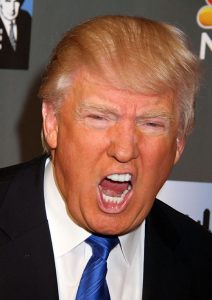
But political issues, personalities, and news stories can be very polarizing.
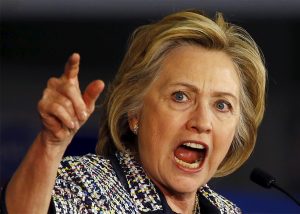
So how do you write a political joke to maximize audience laughter?
Do what you should do when writing any joke: write punch lines that are true. That is, consider your audience very carefully and only write punch lines that say things that most of your audience would agree with.
For example, this joke would probably get laughs at a Hillary Clinton fundraiser:
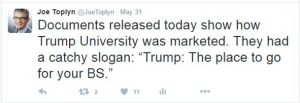
But at a Donald Trump fundraiser, the same joke would probably get muttered complaints.
 On a comedy/talk show on a broadcast network, that joke would probably split the audience. That’s because any general audience probably includes a lot of Trump supporters who wouldn’t agree that Trump University was a scam.
So if you’re aiming for mass appeal, write punch lines that pretty much everybody will accept as true whatever their political leanings.
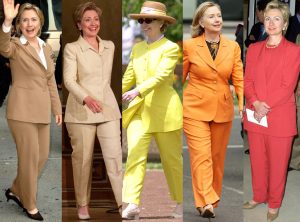 That doesn’t mean you should only write easy, hacky jokes about overused associations like Hillary’s pantsuits…
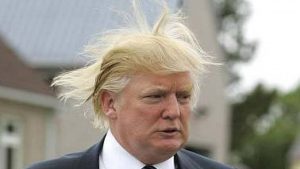
…and Trump’s hair.
Instead, build your jokes around fresh associations that almost all of your intended audience will still accept as true.
For example, this joke would probably make a general audience laugh.
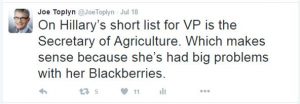
 Yes, that joke is about Hillary. But it doesn’t say anything negative about her personally. It only says that her sending emails using her personal Blackberries has caused political problems for her. And that’s hard for even her supporters to dispute.
To decide whether a general audience will accept some association of a topic as true, absorb a lot of news and commentary from across the political spectrum. If both left-leaning and right-leaning media outlets are saying the same thing about someone or something, your punch line can, too.
Of course, a few members of a general audience would probably be offended by the mere fact that you wrote a joke about Hillary. To keep those people on your side, make your next joke about Trump.
Here’s a Trump joke that’s unlikely to split a general audience:
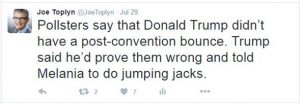
Comedy craftspeople may notice that I wrote that last joke using my Punch Line Maker #1: Link two associations of the topic.
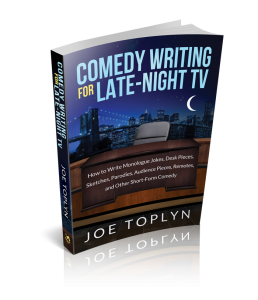
For more about my six Punch Line Makers, get my book Comedy Writing for Late-Night TV.
Setup: Dutch man waits 10 days in Chinese airport for online girlfriend
Punch Line: The airport has never seen a man with so much baggage.
Writer: Rich Feldman
Setup: New movie screen allows for glasses-free 3-D at a larger scale
Punch Line: It’s called a “play.”
Writer: Tyler Martindale
Setup: Man Crashes Into a Cop Car While Playing Pokemon Go
Punch Line: The good news is he found 3 in the holding cell.
Writer: Ray Topper
Setup: Starbucks Bans Smoking Within 25 Feet of Stores
Punch Line: It’s impossible, within 25 feet, there’s already the next Starbucks.
Writer: Marco Arrigoni
A lot of people hate puns. They think puns aren’t funny. And often they’re right.
That’s because many puns lack one or more of the characteristics of a good joke.
For example, here’s the pun that, as I write this, has received the most votes on OneLineFun.com: “I’m glad I know sign language, it’s pretty handy.”

The reason that joke isn’t funny is because its topic—“I’m glad I know sign language”–isn’t true.
A good joke topic is true.
If you start a joke with a topic that your audience doesn’t believe, they’ll be focusing on that lie instead of paying attention to your joke.
Your audience won’t be engaged by a topic that’s not true. Instead they’ll be thinking, “That guy doesn’t know sign language. He’s only saying he does to set up some tricky punch line to show us how clever he is.” Thus annoyed and distracted, your audience won’t laugh.
Or take this captioned-photo joke, #20 in an article on CollegeHumor.com entitled “20 Puns Even People Who Hate Puns Will Admit Are Good”:

The punch line of that joke–the photo of the plates–is visual. A visual punch line can theoretically get a laugh. But that visual punch line won’t because it’s not surprising.
A good punch line is surprising.
In a well-constructed joke, the topic and the angle (also known as the setup) lead the audience to expect something. The punch line is unexpected, so the audience is puzzled at first. Then they are surprised when they realize that the punch line actually makes sense, and they laugh.
But in the joke above, the setup (the words “Great Wall of China”) and the punch line (the photo of the plates) are both visible at exactly the same time. So the audience has no opportunity to form any expectations about what the words mean; their meaning is right there in the photo. The audience isn’t surprised, so they don’t laugh. The captioned photo is just, again, a demonstration of the writer’s cleverness.
But a punning joke that is well-constructed can get a big laugh.
For example, I wrote this joke and posted it on Comedywire.com:
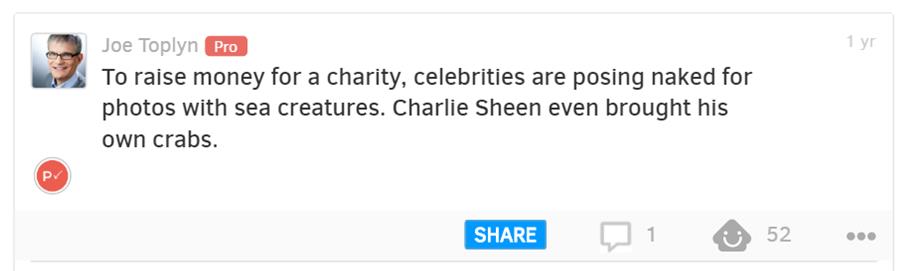
One reason that joke got a lot of votes is that it follows the rules of good joke-writing. The topic rings true: celebrities actually did pose for those photos. Who would make up an odd news item like that?
And the punch line is surprising. The wordplay–“crabs”–arrives at the very end of the joke, only after the topic and angle have led the audience to expect something about sea creatures.
So don’t hate puns and other wordplay jokes. They’re not all bad, just the ones that are badly written.
Finding a play on words in the joke topic is what I call Punch Line Maker #4. Learn five other Punch Line Makers, and many more comedy creation techniques, from my book, “Comedy Writing for Late-Night TV.”
Setup: Spice Girls planning a reunion in 2017
Punch Line: To appeal to millennials they’ve added a new member, Pumpkin Spice.
Writer: Glen
Setup: Scented candles may cause cancer.
Punch Line: Especially if you use them to light your cigarettes.
Writer: Brian Gershowitz