Setup: Police: Masked Man in Elvis Wig Robbed Tasting Room at Winery
Punch Line: Understandably, the locals are all shook up.
Writer: Jay Stone
Setup: Police: Masked Man in Elvis Wig Robbed Tasting Room at Winery
Punch Line: Understandably, the locals are all shook up.
Writer: Jay Stone
Setup: Three Civil War cannons removed from South Carolina River
Punch Line: Their cannons were in the river? No wonder the South lost.
Writer: Maria Wojciechowski
Setup: Astronomer Geoff Marcy is leaving Berkeley in wake of sexual harassment scandal.
Punch Line: Sounds like he was reaching for more than the stars.
Writer: Lina Jane
Setup: Paul Prudhomme, Cajun Chef and Inventor of Turducken, Dies
Punch Line: He’s going to be buried in a body-bag inside of a coffin inside of a sarcophagus.
Writer: Jon Valley
You have a host. Your assignment is to build a new comedy/talk show around him or her. How do you even begin to do that?
Recently The New York Times went behind the scenes to give a glimpse into how James Corden and his staff are creating their version of Late Late Show, premiering on March 23, 2015.
And soon Stephen Colbert and his team will begin to shape a new Late Show, to debut on September 8, 2015.
New comedy/talk shows are also being created around Chelsea Handler, Grace Helbig, and other hosts.
 I know what that process is like. I assisted in the birth of The Chevy Chase Show and The Caroline Rhea Show.
And I saw what worked and what didn’t work during my many years on the writing staffs of The Tonight Show with Jay Leno and Late Show with David Letterman.
So how would I go about creating a new comedy/talk show? I’d start by asking questions like these:
What is our host good at?
You want your show to have your host doing what they do best as often as possible. That way your host will have fun and perform at the top of their game, which means the audience will enjoy watching them.
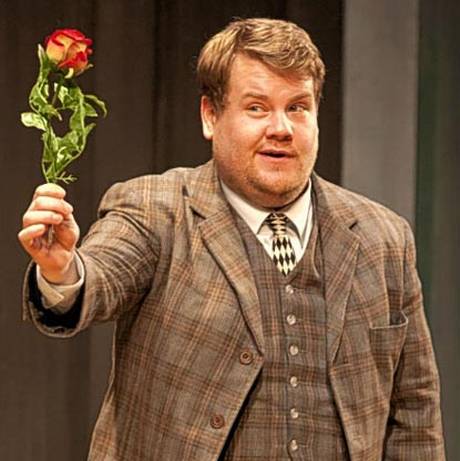 Take James Corden. He’s a Tony Award-winning Broadway star, so his Late Late Show will probably have him performing many comedy scenes and songs. A clue that this is true: the Times article mentions that James hired writer David Javerbaum, with whom I worked on Late Show with David Letterman. In addition to his extensive experience in late night, D. J. is also an award-winning musical-theater lyricist and librettist.
What is our competition doing?
TV viewers crave familiarity but also freshness. Ideally your new show will offer viewers types of entertainment they’re not getting anywhere else in late night.
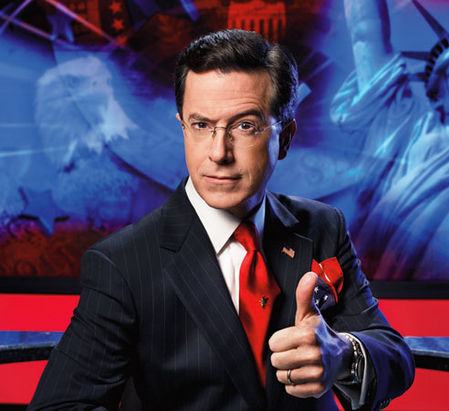 For example, Stephen Colbert and his Late Show team may look at Jimmy Fallon’s Tonight Show and sense an opportunity to do more barbed comedy about politics, celebrities, and current events.
What is physically possible to produce week after week?
The time and money available to produce the show are limited so you can’t always do what you want.
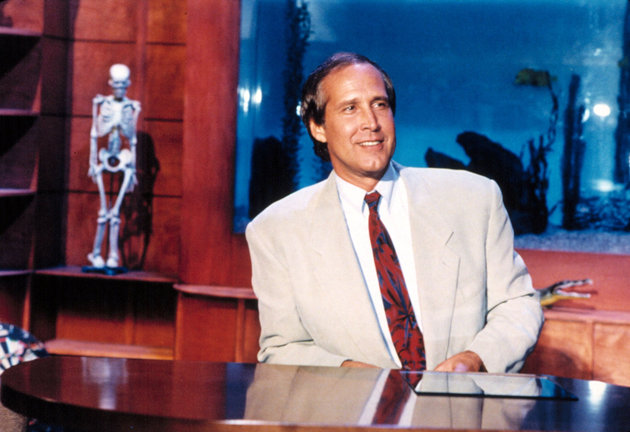
That’s the way it was with Saturday Night Live alumnus Chevy Chase. He’s a gifted sketch performer, so ideally The Chevy Chase Show would have resembled SNL. But no late-night show has the writing budget, production resources, and rehearsal time to air even a half-hour of scripted sketches five nights a week.
How much time is our host willing to devote to the show?
Producing elaborate comedy pieces, like taped TV show parodies, takes up a lot of a host’s time. Producing comedy pieces like field pieces outside of regular business hours also takes a host’s time. If your host can’t or won’t put in that time, they’ll be limiting what comedy you can present on the show.
 Jay Leno could only perform a thirty-joke monologue on each episode of the Tonight Show because he devoted every free moment during the day, and several hours at night, to working on it.
Okay, fine, but what should we actually do on the show?
Use the answers to the above questions to create your new show by customizing the generic comedy/talk show template. In addition to your host, these are the elements of that generic template:
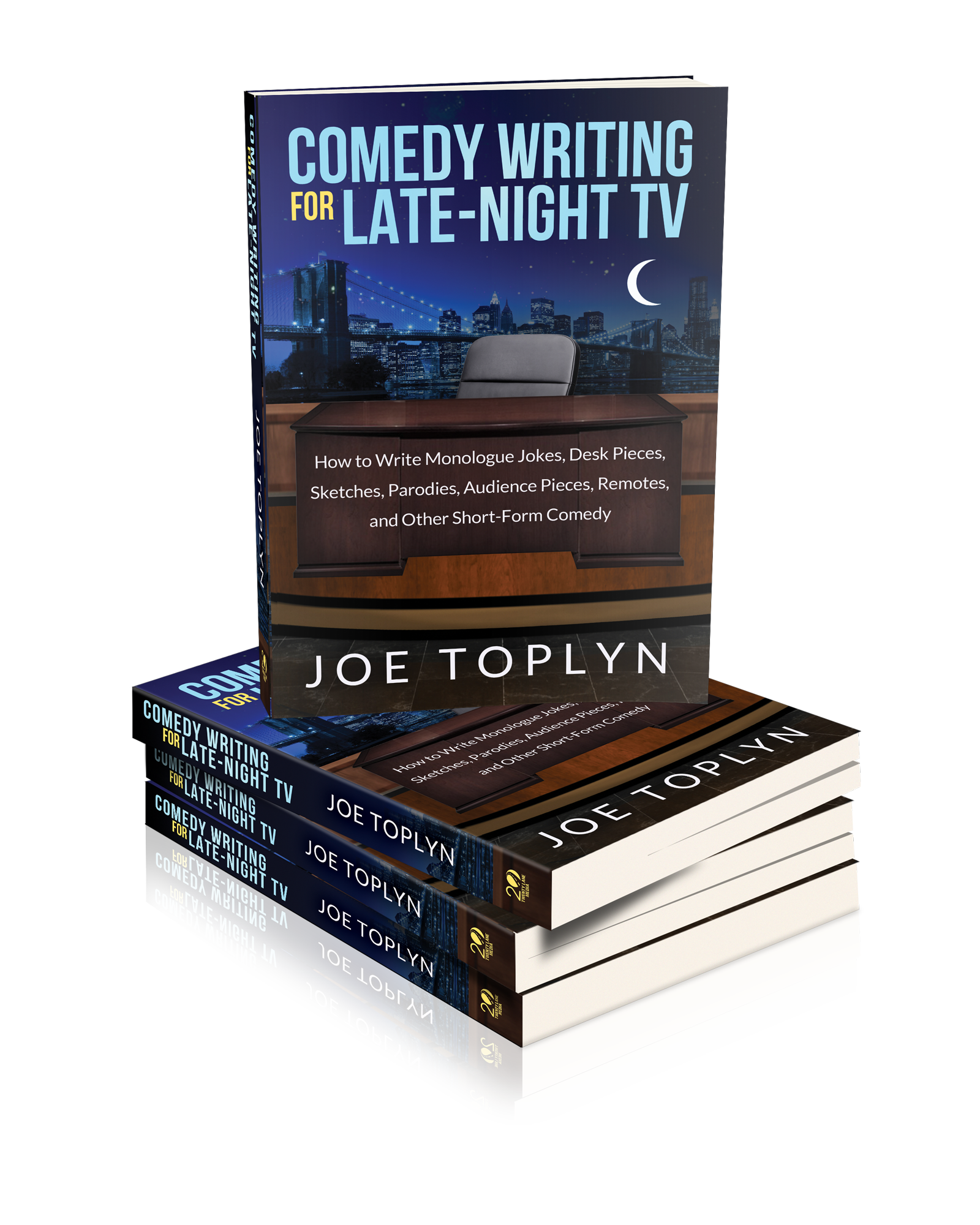
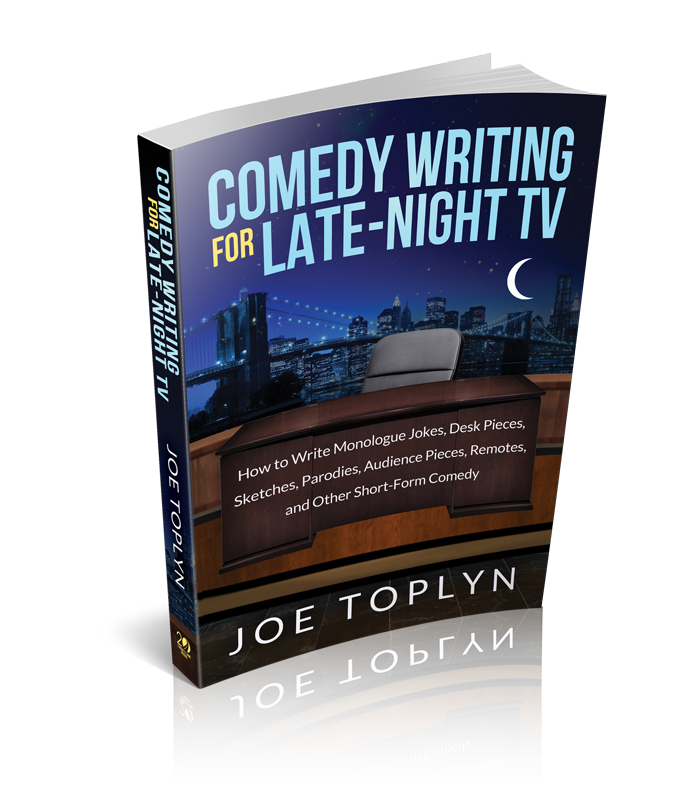 To tailor your comedy pieces to fit your new show and host, get my book, Comedy Writing for Late-Night TV. It’s a comprehensive manual of ways to pack a comedy/talk show with laughs:
Good luck to the new entrants in late-night!
[Possibly NSFW because of the photo of Kim K.]
I had just posted this joke on Twitter:
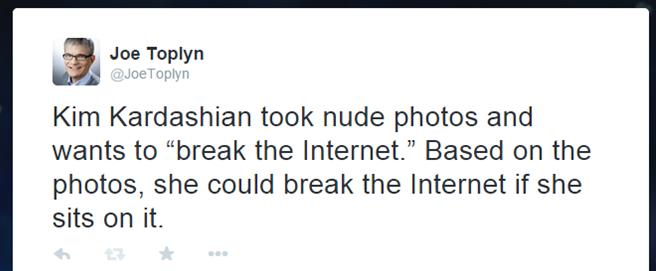

Yes, sometimes I tweet jokes about Kim Kardashian’s butt.
Which is one reason I was surprised when my friend Phil told me that he’d seen one of my tweets in the Reader’s Digest.
He mailed me his copy of the Dec 2014/Jan 2015 issue. Here’s my tweet, in the “Laugh Lines” article on page 127:
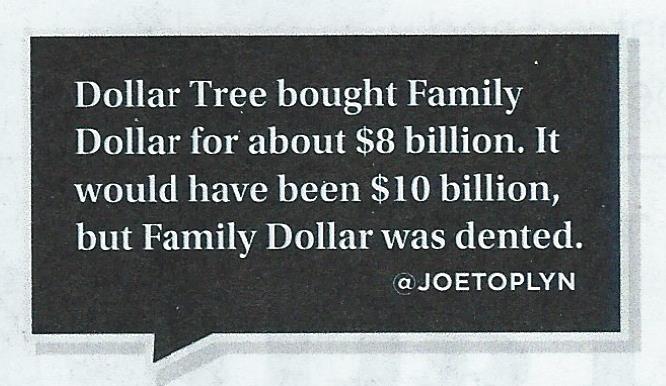
Getting a joke in the Reader’s Digest is one of the coolest things I’ve ever done. Yeah, I know most people don’t think of the magazine as cool. But it played an early role in steering me towards a career as a professional writer.

As a preteen I read my mother’s Reader’s Digests cover to cover. Each one was a tasting menu of attention-grabbing and invitingly short features.
The true stories expanded my horizons and sparked my imagination. The how-to articles fed my curiosity about how the real world operates.
 But I especially gravitated toward the jokes, like the ones in “Humor in Uniform” and “Laughter is the Best Medicine.” I must have started cracking more jokes myself because on one sixth-grade report card my mark in Conduct slipped from its usual A to a B-minus.
The Reader’s Digest was turning me into a class clown.
The magazine also played a role in my getting onto the Harvard Lampoon, my first step on the road to professional comedy.
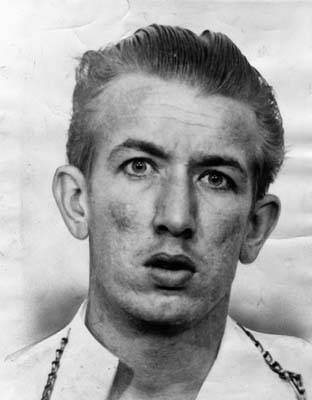
One of the writing samples I submitted was a parody of a Reader’s Digest cover. A fake inspirational article was entitled, “Betty: The Nurse Who Wouldn’t Die, by Richard Speck.”
[Only six years earlier Speck had murdered eight student nurses, so my joke was a real test of the well-known formula “Comedy equals tragedy plus time.”]
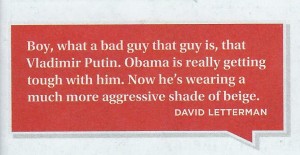 A decade later I was crafting jokes for David Letterman, who appears in that same “Laugh Lines” article with me.
And now my comedy has come full circle, back to the cradle where it was nurtured, the Reader’s Digest. And that’s pretty cool.
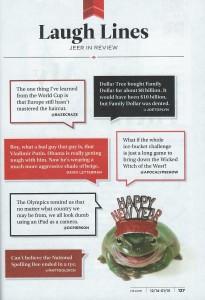
Plus the magazine paid me $25 for that Twitter joke. So, sucker for positive reinforcement that I am, I decided to write another one for them.
Why did the Reader’s Digest pick up my first joke?
In my book, Comedy Writing for Late-Night TV, I talk about how important it is to capture the “voice” of the host. I’ve written for hosts from Dave Letterman to Caroline Rhea to Jay Leno. Now apparently I had captured the voice of the Reader’s Digest—homespun, good-natured, Middle American.
Can I do it again? Here’s my new joke:
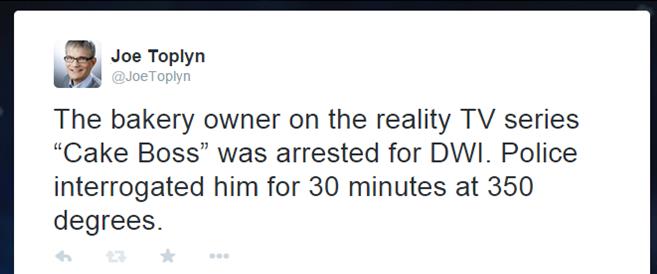
Buy that joke, Reader’s Digest, and I’ll subscribe. That would be the least I could do for the magazine that gave birth to it.
Say you want to write a funny caption for this cartoon, which was the subject of Caption Contest #447 in The New Yorker.
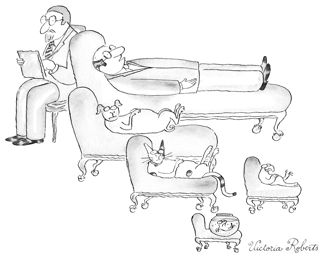
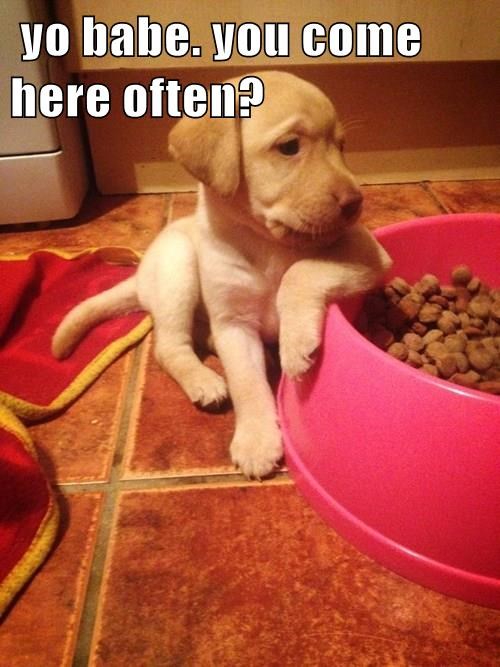
You write funny captions for uncaptioned cartoons the same way you’d write jokes about a Found Photo, which is an unaltered photo that wasn’t originally intended to be funny. Examples of Found Photos are the animal photos on the website I Can Has Cheezburger?…
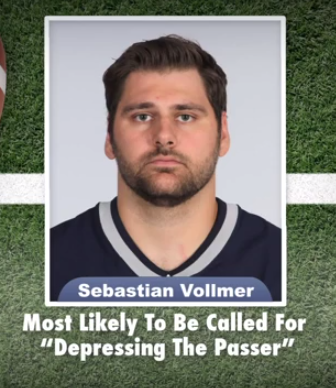
…and the athletes’ headshots in the comedy piece “Superlatives” on The Tonight Show Starring Jimmy Fallon.
Follow these steps to write a funny caption for a cartoon, photo, or other picture:
A) Briefly describe the scene in the picture using its handles. The handles are the one or two most distinctive people or things in the picture and the action that those people or things are performing. This descriptive sentence will bridge the visual picture and a verbal punch line, i.e., the funny caption.
In the case of the New Yorker contest cartoon, the descriptive sentence would be something like, “A guy’s pets have psychotherapy.”
B) Use that descriptive sentence and the Punch Line Makers to create a funny caption. The Punch Line Makers are the six proven techniques for creating punch lines that I cover in my book Comedy Writing for Late-Night TV.
In the case of the New Yorker contest cartoon, the winning writer, Alonso Cisneros, apparently used Punch Line Maker #1: Link two associations of the topic. Here’s how he went about it.
The topic—the descriptive sentence—is “A guy’s pets have psychotherapy.”
Brainstorming on the handle “pets” produces associations like “hair on the furniture,” “shelter animal,” “adoption,” “cat food,” “veterinarian,” “do tricks,” and “leash laws.”
Brainstorming on the handle “psychotherapy” yields associations like “depression,” “fifty-minute hour,” “my parents hate me,” “childhood trauma,” “I was adopted,” “couch,” and “Freud.”
At least one association, the one involving adoption, appears in similar form on both lists. Linking those two associations results in the winning caption:
“My pets found out they were adopted.”
C) Edit the caption using the Joke Maximizers. The Joke Maximizers are twelve tools for editing jokes to make them as funny as possible; I list them in my book. The writer of the winning caption used these Punch Line Makers:
Punch Line Maker #1: Shorten as much as possible. The caption doesn’t have any unnecessary words or syllables.
Punch Line Maker #2: End on the laugh trigger. The most surprising word in the caption—“adopted”—is at the very end.
Punch Line Maker #4: Make everything clear. Every word in the caption is simple. Not only that, the words “my pets” make it clear that the man on the couch is talking. That’s important because it’s not immediately clear from the drawing itself which human or animal is talking, if any.

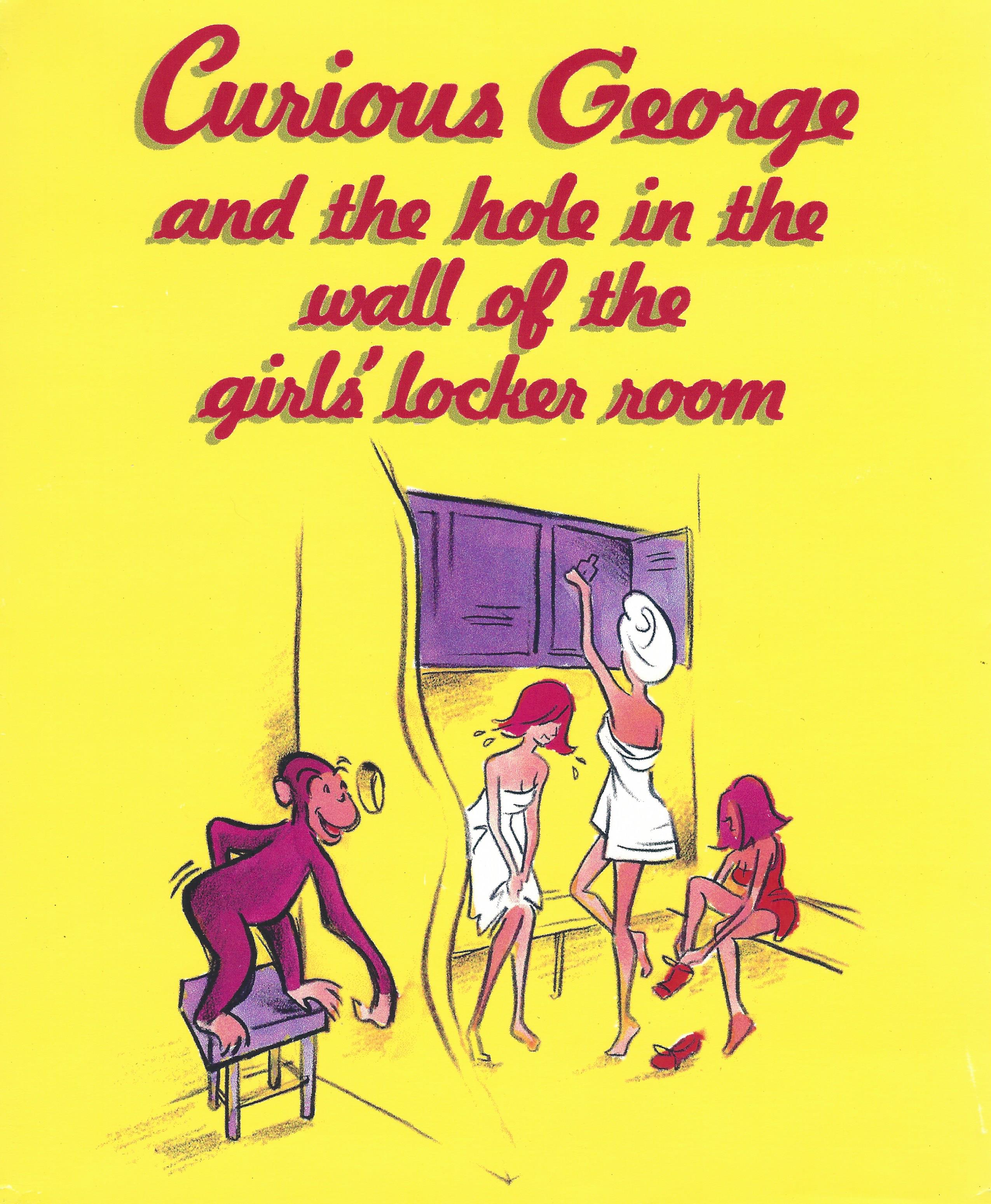
“Children grow up so fast these days. That’s the reasoning behind this latest addition to a beloved series of children’s books. It’s [HOLDS UP FAKE BOOK] Curious George and the hole in the wall of the girls’ locker room.”
That’s an example of a joke in a Desk Piece, a type of short-form comedy that’s popular on many comedy/talk shows. A Desk Piece is a segment of fully-scripted comedy that the host performs by himself while sitting at his desk.
Here’s how I wrote that joke. The process was very similar to that of writing a topical monologue joke, a process I cover in detail in my book Comedy Writing for Late-Night TV.
I started with the topic of the Desk Piece. The topic is typically a collection of things in a particular category, in this case “New Books.” Next I brainstormed a long list of angles off that topic, that is, types of real books. Here’s a partial list of those angles:
 cookbooks * dictionaries * puzzle books * coffee table books * The Lord of the Rings * thesauruses * novels * atlases * children’s books * Mark Twain * celebrity memoirs * paperbacks * etiquette books * Curious George * biographies * encyclopedias * guidebooks * pop-up books * how-to books * photography books * manuals
To create the punch line I chose one angle–Curious George–and used my Punch Line Maker #3 on it, asking the question “What might a curious person do?” I answered that question using a surprisingly unwholesome association of “curious,” which is “spy on people.”
Finally I used my Joke Maximizer #9 (“Get specific”), devising a very specific Peeping George scenario, and arrived at the punch line: “Curious George and the hole in the wall of the girls’ locker room.”
“New Books” is what I call a Graphic/Prop Piece, one of the seven types of Desk Pieces I analyze in my own new book, Comedy Writing for Late-Night TV.
A footnote: I wrote that Curious George joke for Late Show with David Letterman in May 1998 but you’d never know it. It’s an example of evergreen comedy, comedy that has a long shelf life, usually because it’s not based on something topical but on a more lasting pop culture phenomenon.
If you’re preparing a writing sample to submit to a comedy/talk show, include a generous portion of evergreen comedy. That way your submission won’t seem too dated if it winds up sitting on the credenza of some head writer for months before it’s read.
What makes people laugh?
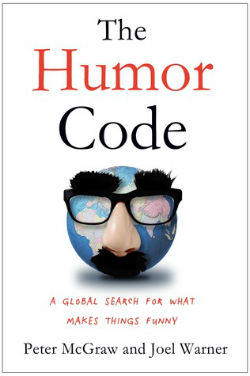 Scholars and theologians have been trying to answer that question since the dawn of comedy. Now Peter McGraw has a theory, the benign violation theory, which he discusses in his entertaining new book The Humor Code, co-written with Joel Warner.
The benign violation theory of humor says that, as Peter puts it, “Laughter only occurs when something is both wrong and okay.” Does that theory crack the humor code of late-night comedy/talk shows? Yes, but only up to a point.
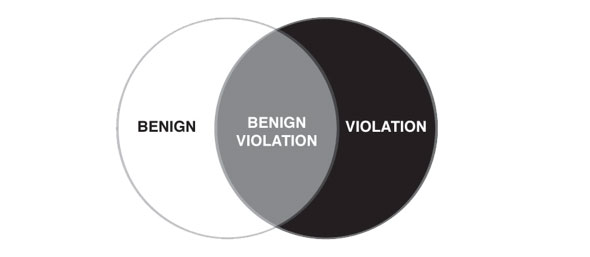
As I put together my book Comedy Writing for Late-Night TV I realized I needed a theory to explain why people laugh. A convincing theory of laughter would make all the comedy writing advice in my book seem less random.
So I did some research and decided that the benign violation theory makes a lot of sense. But the more I thought about how jokes are actually written and about what makes one version of a joke funnier than another, the more I realized that I had to tweak the theory to make it fit the short-form comedy found on late-night TV. The amended theory that I use in my book I call the Surprise Theory of Laughter.
The Surprise Theory of Laughter: We laugh when we’re surprised that an incongruity turns out to be harmless.
My Surprise Theory differs from the benign violation theory in two key ways. The first key difference is this:
The Surprise Theory implies that a sequence of events, rather than simultaneous events, produces laughter. To be more specific, laughter results when something first seems incongruous (a violation) and then is revealed to be harmless (benign).
Let’s see how this sequence of events unfolds in a typical late-night monologue joke, one that I recently wrote and posted on Twitter:
“Alaska Airlines frequent-flier lounges have pancake printers that make 180 pancakes an hour. So now passengers can join the Mile Wide Club.”
When listeners hear “Mile Wide Club” their first thought is, “That’s wrong. It’s supposed to be ‘Mile High Club.’ That’s what airline passengers join.” But then a split-second later they realize that “Mile Wide Club” actually does make sense because eating all those pancakes would make passengers extremely fat.
 The initial violation of the listeners’ worldview turns out to be benign. So the listeners laugh, like prehistoric cavepeople signaling to their cave families that some suspiciously rustling grass does not hide a deadly saber-toothed cat after all but instead a couple of mating monkeys.
The second key difference between the benign violation theory and my Surprise Theory of Laughter is this:
The Surprise Theory acknowledges the importance of, yes, surprise in producing laughter. Building on Peter’s words, the Surprise Theory says that laughter only occurs when something is first wrong and then, surprisingly, okay.
To see how important surprise is, let’s remove some of it from the sample joke this way:
“Alaska Airlines frequent-flier lounges have pancake printers that make 180 pancakes an hour. So now instead of joining the Mile High Club, passengers can join the Mile Wide Club.”
 That revised joke wouldn’t get as big a laugh, would it? The reason is because as soon as listeners hear “Mile High Club” they start expecting a play on those words as the punch line. So “Mile Wide Club” isn’t quite as surprising when it finally arrives. As Joke Maximizer #5 in my book advises: Don’t telegraph the punch line.
Here’s a different way I could rewrite the original joke to reduce the surprise:
“Alaska Airlines frequent-flier lounges have pancake printers that make 180 pancakes an hour. So now joining the Mile Wide Club is something else passengers can do.”
That revised joke puts what I call the laugh trigger—the most unexpected, surprising word or two in the punch line—in the middle of the joke. So when listeners hear “Mile Wide Club” they know the meat of the punch line before the joke is even finished. As a result, their laughter is more diffuse and not as strong. Writers can avoid that problem by applying my book’s Joke Maximizer #2 and ending their jokes on the laugh trigger.
Comedy Writing for Late-Night TV is packed with other practical tips, tricks, and techniques that demonstrate the Surprise Theory of Laughter in action. Taken together they provide ample evidence that the benign violation theory only begins to explain what makes people laugh.
This post is based on a guest post I wrote for the website of The Humor Code. See how the co-author of the book, Peter McGraw, responded to my argument here. He wasn’t entirely convinced.
Some news items are easier to write multiple jokes about than others. Monologue writers like those news items because cranking out several jokes about the same news item takes less time than hunting down other promising news items and then writing jokes about those.
So what makes a news item a good candidate for multiple jokes, or, as I say, fertile?
The answer lies in the handles of the news item. The handles are the most attention-grabbing words or phrases in the news item, those details that stand out the most.
Take this headline that I saw recently on the ABC News website:
“Spain: Woman Arrested With Coke in Breast Implants”
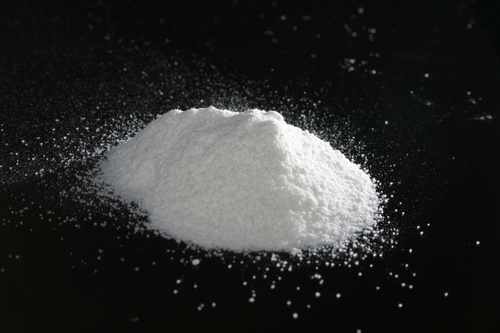 One reason that headline lit up on my joke topic radar was because it has two handles and each handle has a lot of associations, which are words or phrases that come to mind when you think about something. Two handles with a lot of associations make a news item fertile because linking handles using their associations is one of the main ways to create punch lines. So the more associations, the more possible punch lines.
Here’s how that principle works in practice. In the above news item the two handles are “coke” and ”breast implants.” The associations of “coke” include “Colombia,” “snort,” “Coca Cola,” and lots of others. The associations of “breast implants” include “D cup,” “silicone,” “Pamela Anderson,” and many more.
Linking associations like those using Punch Line Maker #1, described in my book, I wrote this joke and posted it on Facebook:
 “In Madrid, police arrested a woman with 4 lbs. of cocaine hidden in her breast implants. Her bra was from Victoria’s Secret Stash.”
Then I added a pop culture association to the mix, used my Punch Line Maker #2, and posted another joke:
 “In Madrid, police arrested a woman with 4 lbs. of cocaine hidden in her breast implants. The good news: she’s now engaged to Charlie Sheen.”
My comedy writer friend Gabe Abelson supplied a third punch line, this one using my Punch Line Maker #4:
“The good news about keeping four pounds of cocaine in your breast implants is they’ll stay up for about 50 years.”
And another comedy writer friend, Wayne Kline, also turned to Punch Line Maker #4 for this one:
“The clever DA lowered the thermostat in the trial room so the evidence will stand up in court.”
The point is that jokes flowed freely from that news item because it has two handles with a lot of associations. So focus first on news items like that when you’re hunting for possible joke topics.
Learn more about my six Punch Line Makers in my book Comedy Writing for Late-Night TV.